

Have you heard of kukicha tea? This variety of Japanese green tea is made from the leaves of Camellia sinensis, which, according to legend, have been on the plant for at least three years. However, this doesn’t exactly work like that today.
Now, what makes kukicha different from other types of Japanese tea? To begin with, the raw material used to prepare it. Instead of selecting new shoots or small leaves, kukicha is made by separating those stems and petioles that are discarded when preparing bancha, another famous Japanese tea. In this way, this infusion has a higher concentration of tannins, being stronger than its “cousins”: bancha or sencha.
How kukicha tea is made
Kukicha is native to Japan, one of the world’s largest producers of green tea despite having very little land to cultivate. In fact, for this reason, the Japanese have become wonderful users of the raw material. That is to say that absolutely nothing is wasted (neither leaves, nor petioles, nor stems) from the tea plants.
Thus, after the flowering of the plant, its leaves are harvested for the preparation of sencha and the lower quality leaves are separated to make bancha. In the following selection process, the branches and petioles are separated but not thrown away, but reserved to make kukicha.
After mechanical separation, the branches and petioles are cut and a short-term, controlled oxidation process begins. Then, in Japanese fashion, they are steamed on bamboo trays to stop oxidation. After this process, they can be subjected to roasting or directly to air drying, and then rolled up and take on the appearance of traditional tea.
A tea with hardly any theine
A striking curiosity about kukicha is its minimal theine content: between 0.5 and 1% caffeine per cup.
This is because this variety is prepared mainly with petioles and stems and a smaller number of leaves, which is where the highest concentration of caffeine in the plant occurs. So now you know: kukicha is a good option to drink at night, during pregnancy or lactation. And even to offer to children!
In addition, it is worth noting that its calcium content is not negligible at all. In fact, some publications indicate that a cup of kukicha would contain more calcium than a glass of milk. However, we have not found compelling scientific studies that corroborate these data.
The taste of authentic kukicha
By mainly using branches and petioles, whose exposure to the sun has been greater, the amount of tannins in this infusion is higher than that of other varieties.
Kukicha tea has an astringent taste, with a noticeable hint of straw if it has been roasted or grassy if it has been directly dried without roasting. Its color in the cup is yellow-green and its aroma is fresh and subtle.
Health properties
Being a slightly oxidized tea, it has the same benefits as green tea. That is to say that, for example, it is rich in antioxidants. Let us remember that these substances fight against free radicals, protecting our body from different chronic diseases such as Alzheimer’s, cardiovascular problems and even cancer.
Likewise, its antioxidant properties would prevent premature aging.
On the other hand, it is considered to have a great alkalizing power, helping to neutralize acidity and favoring good digestion. For this reason, its intake is usually recommended after heavy meals.
Kukicha tea is also rich in minerals and vitamins. Its long permanence in the plant has given it the opportunity to store a good dose of nutritional components recommended for humans.
Like green tea, kukicha has a diuretic effect that recommends its inclusion in diets to lose weight as well as in the usual menu of those with fluid retention and hypertension.
How to prepare a cup of kukicha
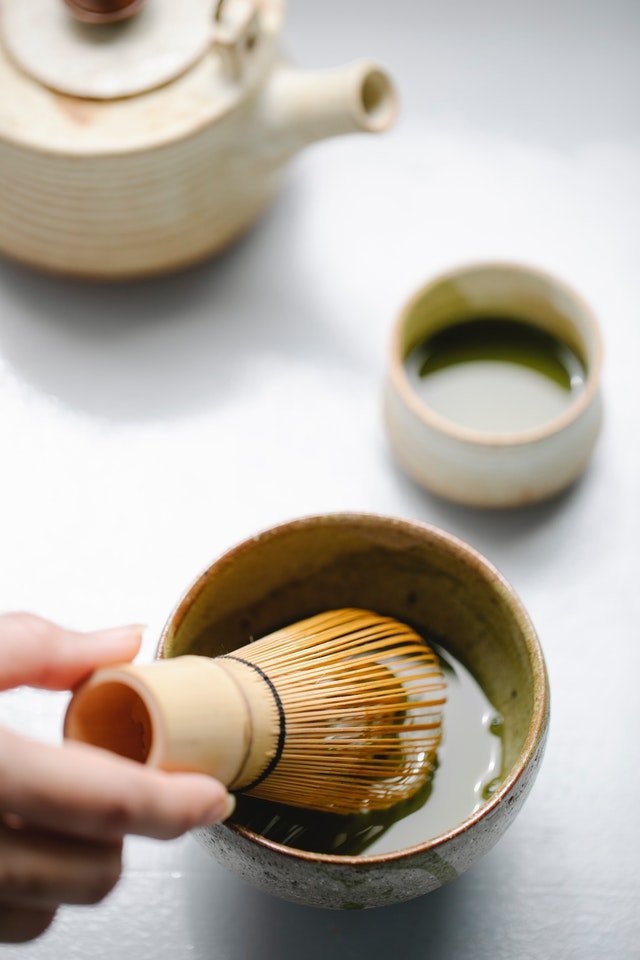
Whether you want to prepare roasted or unroasted Kukicha, the procedure is the same. We recommend you let yourself be advised by your trusted herbalist to acquire the variety that best suits your tastes.
Now, to prepare the infusion, you must heat the water to 80 °. It is very important that you respect the temperature since green teas are very delicate and, when faced with boiling water or at a high temperature, they can become bitter (remember that in a previous article we told you how to prevent green tea from becoming bitter). Once you have the water at the right temperature, infuse the kukicha for two minutes.
Let yourself be surprised by the subtle and different flavor of kukicha. You will see how this Japanese tea does not leave you indifferent both for its flavor and for its nutritional contribution and health benefits.